Hey there, fitness fanatics and core-strength seekers! Who else dreams of a rock-solid midsection but sometimes feels like their ab routine is stuck on repeat?
Trust me, I completely get it. We’ve all scrolled through countless workout videos, hoping to stumble upon that one magic exercise that finally carves out those elusive abs.
But here’s the secret I’ve learned from years of trying almost everything: sometimes, the simplest tools are the most profoundly effective. When it comes to sculpting a powerhouse core and building functional strength that goes way beyond aesthetics, the humble ab wheel is an absolute game-changer that often gets overlooked.
Now, I’ve personally rolled, struggled, and ultimately triumphed with a variety of ab wheels over the years – from the super basic to the surprisingly fancy.
And let me tell you, the right ab wheel makes a world of difference. It’s not just about chasing a six-pack; it’s about fortifying your entire core, which translates to better posture, reduced back pain, and a serious boost in your overall athletic performance.
I’ve witnessed firsthand how picking a flimsy, ill-suited wheel can lead to nothing but frustration (and maybe even a tweaked lower back!), while a well-chosen one can genuinely transform your fitness journey.
With effective home workouts becoming more essential than ever in our busy lives, investing in a quality ab wheel is a smart move. You don’t want to waste your hard-earned cash on something that won’t deliver.
Let’s dive into all the details below and get you rolling towards your strongest core ever!
Choosing Your Ab Wheel: What Really Matters
The Wheel Itself: Single vs. Double vs. Wider
Okay, so you’re ready to commit, but a quick search shows a gazillion options. Don’t sweat it, I’ve been there! The first thing you’ll notice is the
wheel design
. You’ve got your classic single wheel, which, let me tell you, offers a fantastic, albeit challenging, stability workout. It demands a lot from your core to keep you from veering off course, and if you’re looking for an intense challenge, this is it.
Then there are double-wheeled models. I personally started with a double wheel, and I found it offered a bit more stability, making the initial learning curve a little less frustrating.
It’s a great stepping stone for beginners or anyone who wants to focus purely on the abdominal contraction without battling too much for balance. Finally, some wheels are just wider – they give you an even larger base of support, which can be awesome if you’re rehabilitating an injury or really just starting from scratch.
My advice? Don’t overthink it, but consider your current core strength. If you’re a total newbie, a double or wider wheel might just save your sanity!
The key here is not to get discouraged by instability, but to gradually build up to it.
Handles and Grip: Don’t Underestimate Comfort
Now, let’s talk about something often overlooked: the handles. Trust me, after a few sets, those tiny details make a huge difference. I’ve had wheels with flimsy plastic handles that dug into my palms, and let me tell you, that’s a quick way to kill your motivation.
You want something
ergonomic
, something that feels substantial in your hands, and preferably something with a non-slip grip. Foam handles are usually a good bet, offering comfort and absorbing a bit of sweat.
Rubberized grips are also fantastic for maintaining control, especially as your hands get a bit sweaty during those intense sessions. Imagine you’re halfway through a rollout, and your hand slips – not ideal!
A good grip isn’t just about comfort; it’s about safety and allowing you to focus purely on your core engagement, rather than worrying about your hands.
This small detail can genuinely elevate your entire workout experience and prevent
unnecessary discomfort.
| Ab Wheel Type | Key Characteristics | Best For | My Takeaway |
|---|---|---|---|
| Single Wheel | Narrow, highly unstable, requires immense core and shoulder stability. | Advanced users, perfecting anti-rotation, maximum challenge. | Brutal but incredibly effective for building raw strength and control. Not for the faint of heart starting out! |
| Double Wheel | Two wheels side-by-side, offers more stability than a single wheel. | Beginners to intermediate, focusing on form, learning the movement. | A fantastic starting point that gives you enough support to learn without being too easy. My personal preference for most people. |
| Wide Wheel / Treaded | A single, extra-wide wheel or a wheel with a wider, grippier tread. | Absolute beginners, those with stability concerns, rehabilitation. | Offers the most stability, making it less intimidating for newcomers. Great for building confidence before progressing. |
| Spring-Assisted | Internal spring provides resistance on rollout and assistance on return. | Beginners needing help with the return phase, injury recovery. | Can be helpful if you really struggle with the concentric part of the movement. Just ensure you’re still engaging your core fully. |
Mastering the Ab Wheel Rollout: Form is Everything
The Foundation: Perfecting Your Starting Position
Alright, let’s get down to brass tacks: the rollout itself. You might think it’s just pushing a wheel, but oh, how wrong that assumption can be! I’ve seen countless people (and been guilty myself in the early days) just dive in, only to feel it in their lower back instead of their abs.
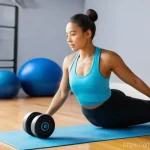
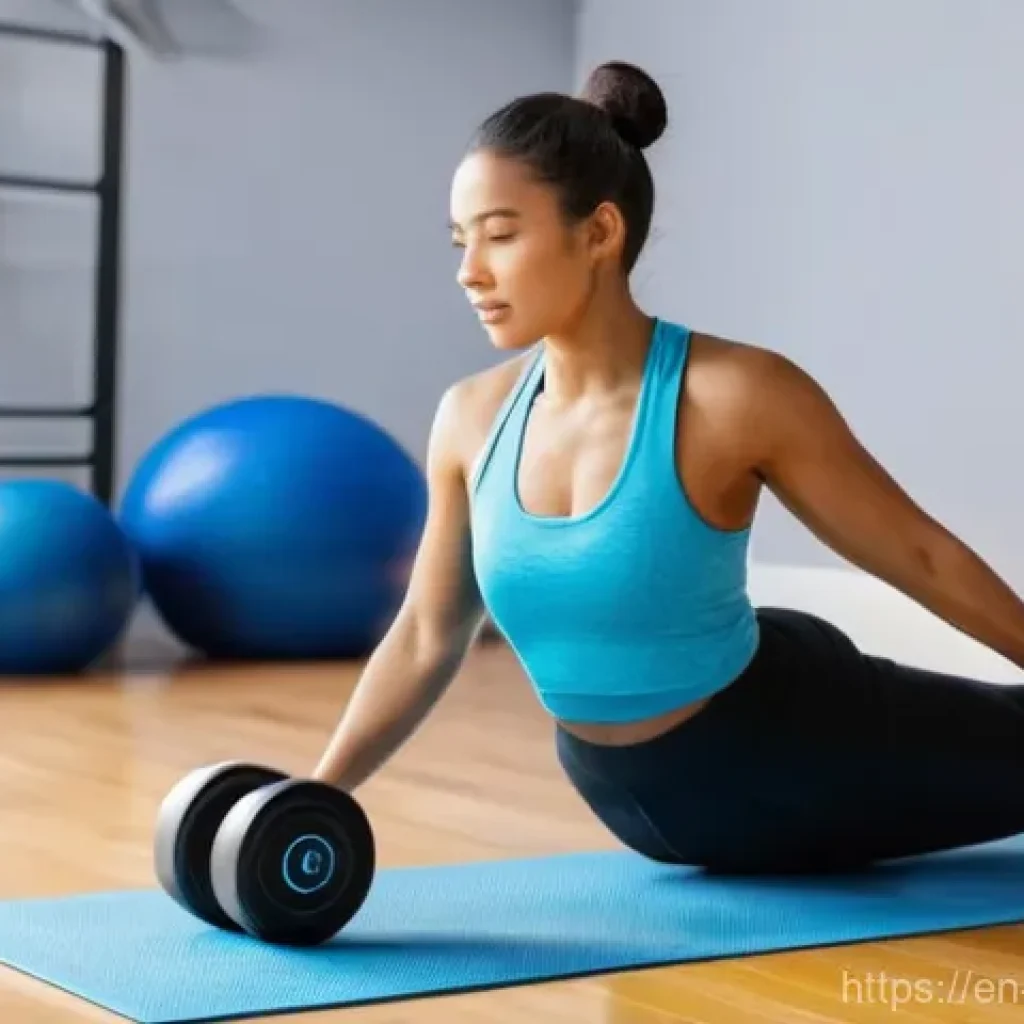
It starts with your setup. Kneel on a soft surface – a yoga mat works wonders – with your knees hip-width apart. Hold the ab wheel handles firmly, directly beneath your shoulders.
Now, here’s the
crucial bit: before you even think about rolling, engage your core
. Seriously, brace your abs as if you’re about to take a punch. Your back should be flat, not arched or rounded.
Think of it like a plank on your knees, but with the added challenge of the wheel. This initial engagement is your non-negotiable first step, protecting your lower back and ensuring your abs are doing the heavy lifting right from the get-go.
If you skip this, you’re setting yourself up for potential strain rather than gains.
The Rollout and Return: Controlled Power
With your core braced, slowly begin to roll the wheel forward, extending your body. The key word here is
slowly
. You’re not trying to see how far you can get; you’re trying to control the movement. Keep your abs tight, your back straight, and avoid letting your hips sag towards the floor.
It’s like a moving plank! Only go as far as you can maintain perfect form without feeling any strain in your lower back. For some, that might be just a few inches initially, and that’s perfectly okay.
Don’t let your ego tell you to push further than your core can handle. To return, it’s not about pulling with your arms. Oh no, that’s a common mistake.
Instead,
powerfully contract your abs
to pull the wheel back towards your knees. Imagine trying to bring your belly button to your spine. It’s an intensely challenging movement, and you should feel that deep burn in your rectus abdominis and obliques.
The entire motion should be controlled, deliberate, and driven by your core strength.
Beyond the Basics: Advanced Ab Wheel Variations
Standing Rollouts: Upping the Ante
Once you’ve absolutely crushed the kneeling rollout and your core feels like concrete, you might be wondering, “What’s next?” Well, my friend, prepare for the beast: the standing ab wheel rollout
. I remember the first time I attempted this; it was humbling, to say the least! This variation elevates the challenge significantly because you’re starting from a standing position, meaning your entire body is working against gravity right from the start.
You’ll need incredible core strength, shoulder stability, and hamstring flexibility to even get into position. Begin by standing with your feet hip-width apart, holding the ab wheel on the floor in front of you.
Slowly roll out, keeping your back flat and your core engaged, just like in the kneeling version. However, the range of motion will likely be smaller at first, and that’s perfectly normal.
Focus on
controlled movement
and only go as far as you can maintain impeccable form. This isn’t just an ab exercise; it’s a full-body stability and strength test.
Oblique Rollouts and Single-Arm Challenges
If standing rollouts haven’t pushed you enough, or if you’re looking to target those side abs (obliques) with surgical precision, try oblique rollouts
. Instead of rolling straight out, angle the wheel slightly to one side as you extend. This subtle shift immediately fires up your obliques in a way that straight rollouts don’t quite achieve.
Alternate sides with each repetition for a balanced workout. And for the truly brave (or slightly insane!), there’s the
single-arm ab wheel rollout
. I’m not going to lie, this one is brutal but incredibly rewarding for unilateral core strength and shoulder stability. It requires immense control and balance.
Start with a very short range of motion, perhaps against a wall, and gradually increase your distance. Remember, these advanced variations aren’t just about showing off; they’re about continually challenging your body in new ways to foster growth and prevent plateaus.
Always prioritize form over distance, especially with these high-level moves!
Integrating the Ab Wheel into Your Full-Body Routine
Strategic Placement: When to Roll
So, you’ve got your awesome ab wheel, and you’re starting to get the hang of it. But how do you actually fit it into your existing workout schedule without it feeling like just another random exercise?
I’ve found that the best time to incorporate ab wheel work is either at the beginning of your workout as an activation exercise or at the very end as a core-specific finisher.
If you do it at the start, a couple of sets can really
wake up your core muscles
, priming them for other compound lifts like squats or deadlifts where core stability is paramount. It’s like telling your abs, “Hey, wake up, we’ve got work to do!” On the other hand, throwing in 3-4 sets at the end of your session acts as an
intense finisher
, ensuring your core is completely fatigued after all your other training. This way, you’re dedicating specific time to core strength without overdoing it before your main lifts.
Just don’t try to do it
between heavy sets, trust me, your form will suffer!
Complementary Exercises for a Powerhouse Core
While the ab wheel is phenomenal, it’s not the only
core exercise you should ever do. Think of it as a superstar player on your team, but even superstars need support! I personally love pairing ab wheel rollouts with exercises that hit different aspects of core strength.
For anti-rotation, planks and side planks are absolute gold. They teach your core to resist twisting, which is crucial for everyday movements and injury prevention.
For flexion, classic crunches and bicycle crunches still have their place, especially for targeting the upper abs. And for hip flexor strength and lower ab engagement, leg raises (hanging or lying) are fantastic.
A
well-rounded core program
, in my opinion, includes a mix of these movements. So, don’t just roll; diversify! By combining the dynamic strength of the ab wheel with the isometric hold of a plank and the controlled flexion of crunches, you’re building a truly resilient and functional core that will serve you well in all aspects of life.
Troubleshooting Common Ab Wheel Challenges
Lower Back Pain: The Arch Nemesis
“My lower back hurts!” This is probably the most common complaint I hear from people trying the ab wheel, and it’s almost always a sign that something’s off with your form.
Been there, felt that! The culprit is usually an
over-arched lower back
. When you let your hips sag and your belly drop towards the floor, your lower back takes all the strain, leading to discomfort and potential injury. The fix?
Remember that initial core engagement I talked about earlier. Really focus on tucking your pelvis slightly and bracing your abs like crazy. Think of pulling your ribs down towards your hips.
If you’re still struggling, don’t roll out as far. Seriously, shorten your range of motion significantly until you can maintain that perfectly flat, stable back throughout the entire movement.
Consistency with proper form
in a smaller range is infinitely better than pushing too far and hurting yourself. Consider doing your rollouts against a wall initially, which can help limit your range and build confidence.
Lack of Progress: Breaking Through Plateaus
So, you’re rolling out perfectly, feeling strong, but suddenly, you hit a wall. Your progress stalls, and you’re not getting any further or stronger. Believe me, plateaus are a normal part of any fitness journey!
When this happens with the ab wheel, it’s time to
shake things up
. First, ensure you’re still challenging yourself. Are you doing enough reps and sets?
Maybe it’s time to increase them slightly. Secondly, consider those advanced variations we talked about earlier. Attempting a standing rollout, even if it’s a tiny range, can spark new growth.
Or, try slowing down your repetitions, making the eccentric (rolling out) phase extra controlled and prolonged. Another trick I love is adding a pause at the furthest point of your rollout, holding that intense contraction for a couple of seconds before returning.
These small tweaks increase the
time under tension
, forcing your muscles to adapt and grow stronger. Don’t get discouraged; view a plateau as an opportunity to get creative with your training!
Why the Ab Wheel Trumps Other Core Exercises
Beyond Flexion: Anti-Extension Prowess
You know, there are a ton of core exercises out there, from crunches to planks, and they all have their place. But if I had to pick one that gives you the
biggest bang for your buck
for functional core strength, it’s the ab wheel, hands down. Why? Because it excels at something called “anti-extension.” Most traditional ab exercises, like crunches, focus on spinal flexion – literally bending your spine.
While that’s fine, our core’s primary role in real life isn’t just to bend; it’s to
prevent
unwanted movement, especially extension (arching your lower back). Think about lifting something heavy, swinging a golf club, or even just standing tall.
Your abs are constantly working to keep your spine stable. The ab wheel brutally challenges this anti-extension capability, forcing your entire anterior core to resist your lower back from arching.
This translates directly to
better posture, reduced back pain
, and a more resilient spine in everyday activities and sports. It’s a game-changer for truly functional core power.
Full Core Engagement: More Than Just the Six-Pack
Another reason I absolutely adore the ab wheel is its ability to engage so much more than just your superficial “six-pack” muscles (the rectus abdominis).
While those definitely get a fantastic workout, the ab wheel simultaneously fires up your
deep core stabilizers
like the transverse abdominis, your obliques, and even muscles in your shoulders and lats that are crucial for stability during the movement. It’s a compound movement for your core!
When you’re rolling out, you’re not just crunching; you’re bracing, stabilizing, and resisting. This holistic engagement means you’re building a truly strong, integrated core from the inside out.
My own experience has shown me that consistent ab wheel work has improved my overhead pressing strength and even my running posture, simply because my core became so much more robust and connected.
It’s not just about aesthetics; it’s about building a
solid foundation for all your physical endeavors.
My Personal Journey: Ab Wheel Transformation
From Skeptic to Believer: My Early Days
I’ll be honest with you, when I first saw an ab wheel, I thought it was some kind of gimmick. Another piece of “as seen on TV” equipment destined to gather dust in the garage.
I mean, how much could a little wheel really do? My initial attempts were… well, let’s just say they weren’t pretty. I remember feeling a distinct pulling in my lower back and wondering if I was doing it all wrong.
It was frustrating, and for a while, that little wheel sat ignored. But then, I stumbled upon some
proper form tutorials
, and a lightbulb went off. I scaled back my range, focused intensely on that core brace, and suddenly, it clicked. The burn in my abs was undeniable, a deep, satisfying ache that told me I was finally hitting the right muscles.
From that moment, I became a true ab wheel convert. It wasn’t overnight, but the
consistent effort, even with short, focused sessions, started to pay dividends.
The Unseen Benefits: Beyond the Visible Abs
As I continued with my ab wheel journey, something unexpected happened. While I was definitely noticing more definition in my midsection, the biggest benefits were the ones you couldn’t necessarily see in the mirror.
My posture, which had always been a bit slumped from too much desk work, started to improve significantly. I found myself standing taller, feeling more aligned.
And the nagging lower back stiffness that used to pop up after long walks or certain exercises? It gradually started to diminish. I felt stronger in my everyday movements, more stable during my lifts, and generally more “put together.” It was this
functional strength
, this feeling of a truly solid core supporting my entire body, that truly solidified the ab wheel’s place in my routine. It wasn’t just about the aesthetic goal; it was about building a
resilient, pain-free, and powerful body
. That’s a transformation I wholeheartedly recommend chasing.
Wrapping Things Up
And there you have it, folks! My deep dive into the incredible world of the ab wheel. If there’s one piece of equipment that truly transformed my core strength and overall physical resilience, it’s this deceptively simple tool. It’s not about endless crunches or fancy machines; it’s about intelligent, targeted movement that respects your body’s mechanics. I genuinely hope my personal experiences and these tips inspire you to pick up an ab wheel, or dust off the one you already have, and embark on your own journey to a stronger, more stable core. Remember, consistency and impeccable form are your best friends here. Don’t be afraid to start small, celebrate every little improvement, and truly feel the power building within you. Trust me, your core (and your back!) will thank you for it.
Good to Know Info
1. Always prioritize a proper warm-up before you even think about grabbing that ab wheel. Seriously, your muscles need to be ready for action. I always start with 5-10 minutes of light cardio like jogging in place or jumping jacks to get the blood flowing, followed by dynamic stretches focusing on my core, hips, and shoulders. Think cat-cow stretches, gentle spinal twists, and arm circles. Skipping this step is like trying to run a marathon without tying your shoelaces – you’re just asking for trouble, or at least a less effective workout. A prepared body performs better and, more importantly, stays injury-free. I’ve learned this the hard way more times than I care to admit, and a good warm-up has become a non-negotiable part of my routine, ensuring every rollout counts. It truly sets the stage for a powerful and safe session, allowing you to get the most out of your core engagement from the very first rep.
2. Don’t underestimate the power of breathing! It might sound basic, but proper breathing during ab wheel rollouts is a game-changer for both performance and core engagement. As you roll out, take a deep inhale, filling your diaphragm. Then, as you powerfully pull the wheel back in, exhale forcefully, drawing your belly button towards your spine. This “bracing” breath not only helps to stabilize your core and protect your spine, but it also intensifies the abdominal contraction. It creates intra-abdominal pressure, essentially turning your core into a solid, protective cylinder. I used to just hold my breath, which made me tense and limited my range of motion. Once I focused on conscious breathing, my control improved dramatically, and I felt the burn exactly where it needed to be. It’s a fundamental technique that can elevate your ab wheel game from good to truly great, ensuring you’re working your core intelligently and efficiently.
3. Consider adding resistance bands to your ab wheel routine for an extra layer of challenge or assistance. This is one of my favorite “hacks” for progression! If you’re finding the full rollout too difficult, you can loop a resistance band around your feet and the ab wheel handles. The band will provide some assistance on the return phase, helping you maintain better form as you build strength. Conversely, if you’re a seasoned pro looking to intensify your workout, you can use a band wrapped around a stable anchor point (like a power rack) and your waist, pulling against its resistance as you roll out. This creates incredible tension throughout the movement, truly pushing your core to its limits. I’ve found bands to be incredibly versatile, allowing me to fine-tune the difficulty of my ab wheel sessions and continually challenge my body in new and exciting ways, preventing any plateaus in my strength gains.
4. Listen to your body, always. This isn’t just a cliché; it’s the golden rule for sustainable fitness. The ab wheel is an incredibly effective tool, but it’s also demanding, especially on your core and lower back. If you feel any sharp pain, especially in your lower back, stop immediately. It’s not about pushing through pain; it’s about pushing through discomfort while maintaining perfect form. Sometimes, a slight adjustment in your knee position, a stronger core brace, or simply reducing your range of motion can make all the difference. Overtraining or ignoring warning signs can lead to injuries that will set your progress back much further than taking a day to rest or deload. I’ve learned that respecting my body’s signals allows me to train harder and more consistently in the long run. There’s no shame in modifying an exercise; the goal is long-term strength and health, not a single heroic (but potentially damaging) rep.
5. Don’t forget the importance of a nutritious diet and adequate hydration for optimal core strength and recovery. You can do all the ab wheel rollouts in the world, but if you’re not fueling your body properly, you won’t see the results you’re working so hard for. Protein is essential for muscle repair and growth, so make sure you’re getting enough lean meats, fish, eggs, or plant-based sources. Complex carbohydrates provide the energy for intense workouts, while healthy fats support overall health. And water? Oh my goodness, water is crucial! Dehydration can lead to fatigue, reduced performance, and even muscle cramps. I’ve noticed a huge difference in my energy levels and recovery when I’m consistently drinking enough water throughout the day. Think of your body as a high-performance engine; it needs the right fuel and coolant to run efficiently. This holistic approach, combining smart training with smart nutrition, is the true secret to unlocking your full potential.
Key Takeaways
Ultimately, the ab wheel is a powerhouse tool for building a strong, resilient, and functionally powerful core. Remember to always prioritize impeccable form over the number of reps or how far you can roll out; your lower back will thank you! Start with a double or wider wheel if you’re a beginner, and pay close attention to ergonomic handles for comfort and safety. As you progress, challenge yourself with advanced variations like standing or oblique rollouts, but never at the expense of proper technique. Integrate the ab wheel strategically into your routine, pairing it with complementary core exercises for a well-rounded program. And please, listen to your body, focus on your breathing, and fuel yourself with proper nutrition. My journey from skeptic to absolute believer has shown me that consistent, mindful ab wheel training not only sculpts your midsection but genuinely enhances overall stability, posture, and strength, contributing to a more capable and pain-free life.
Frequently Asked Questions (FAQ) 📖
Q: Beyond just getting a six-pack, what are the real benefits of consistently using an ab wheel?
A: Oh, this is one of my favorite questions because it gets to the heart of why the ab wheel is so amazing! While a defined midsection is definitely a nice bonus, the real magic of consistent ab wheel training goes far deeper.
From my own experience, and what I’ve seen with countless others, it’s about building serious, functional core strength. This means you’re not just stronger in the gym; you’re stronger in everyday life.
Think about it: better balance, improved posture that can make you stand taller and feel more confident, and significantly reduced risk of lower back pain, which is a huge win for anyone with a desk job or who lifts heavy things (even groceries!).
The ab wheel fires up not just your rectus abdominis (the “six-pack” muscles), but also those deep, stabilizing transverse abdominis, your obliques, and even the muscles in your lower back, shoulders, and arms.
It’s a full-body engagement that translates into enhanced athletic performance, whether you’re playing sports, doing yoga, or just chasing after your kids.
I used to struggle with certain compound lifts, but once I really committed to the ab wheel, the stability and strength I gained made a noticeable difference.
It truly teaches your core to work as a cohesive unit, which is exactly how it functions in real life.
Q: There are so many ab wheels out there – how do I pick one that’s genuinely effective and won’t just sit in a corner collecting dust?
A: I’ve been through my fair share of ab wheels, and let me tell you, there’s a definite difference between a flimsy toy and a sturdy, effective piece of equipment!
The biggest mistake I see people make is grabbing the cheapest option, only to find it wobbly, uncomfortable, or just plain ineffective. First off, look for durability.
You want something made with high-quality materials – sturdy plastic or metal for the wheel itself, and a strong, stainless steel shaft. A cheap wheel can quickly become unstable or even break, which is a recipe for frustration and potential injury.
Next, consider the wheel design. For beginners, I always recommend a wider wheel or even a double-wheel design because it offers more stability and makes learning the movement much easier.
As you get more advanced, a narrower wheel can provide a greater challenge by demanding more balance. Don’t overlook the handles! They should be ergonomically designed, comfortable, and have a non-slip grip.
Padded handles are a big plus, especially as you increase your workout intensity. Trust me, sore palms are no fun! Some even come with knee pads, which are a godsend for protecting your knees during those initial reps.
It’s an investment in your fitness, so aim for quality over the lowest price point. A good ab wheel will last you for years and genuinely make you want to use it.
Q: I’ve heard ab wheels can be tough on the lower back. How can I use it safely and avoid injury, especially as a beginner?
A: This is such an important concern, and it’s totally valid! Many people, myself included when I first started, experience lower back discomfort, and it’s usually due to a few common mistakes.
The biggest culprit is often over-extending or letting your hips sag too much, which puts a ton of stress on your lower back. My top tip is this: don’t focus on rolling out as far as you can initially.
Instead, focus on maintaining a slightly rounded back position throughout the movement, really squeezing your abs and glutes as if you’re bracing for a punch.
Your core muscles should be doing the work to prevent your lower back from arching. Start with a shorter range of motion where you can maintain perfect form, rolling out only as far as you can comfortably control without feeling any strain in your lower back.
A knee pad is a must-have for comfort, and if you’re really struggling, try using a wall to limit your range, or even practice with resistance bands looped around your feet and the wheel handles – they give you a little assistance on the way back, helping you build strength safely.
Remember, the slower and more controlled you go, the harder your abs have to work, and the safer you’ll be. Don’t forget to breathe properly, too – exhale as you roll out and inhale as you come back in.
Consistency with good form beats going for maximum distance every single time!