Hey there, fitness fanatics! Ever feel like building that perfectly sculpted chest is a never-ending quest, especially with so many machines vying for your attention at the gym?
Or perhaps you’re setting up your dream home gym and are completely overwhelmed by the sheer number of chest press options out there. I totally get it – I’ve spent countless hours, and a fair bit of trial and error, figuring out which machines truly deliver the best results for a strong, well-defined chest.
After countless reps and comparing models, I’m thrilled to share my insights to help you make the smartest choice for your gains. Let’s get into the specifics and find the perfect chest press machine for you!
Unlocking Your Pec Potential: Why Machine Choice Matters
Personalizing Your Chest Workout Journey
Oh, trust me, I’ve been there – staring blankly at a row of intimidating machines, wondering which one would actually give me those sculpted pecs I was dreaming of.
For years, I just hopped on whatever was free, blindly pushing weights without a real strategy. It felt like I was working hard, but my chest growth was, well, meh.
It wasn’t until I started to really understand the nuances of each chest press machine that my workouts transformed. Choosing the right machine isn’t just about lifting heavy; it’s about connecting with your muscles, understanding how different angles and resistances feel, and ultimately, making every single rep count.
I realized that a generic approach yields generic results, and my body deserved a more personalized touch. This journey of discovery felt like unlocking a secret level in my fitness quest, and I’m so excited to share what I’ve learned.
Beyond the Hype: Finding Your Perfect Match
The fitness world is absolutely overflowing with marketing jargon and “must-have” equipment, and honestly, it can be totally overwhelming. But here’s the real talk: what works wonders for one person might just be ‘okay’ for another.
I’ve personally tried machines that trainers swore by, only to find they just didn’t ‘click’ with my body mechanics or target my chest the way I wanted.
Then, there were those unexpected gems, machines I nearly overlooked, that suddenly ignited muscles I didn’t even know I had! It’s all about experimenting and listening to your body.
Sometimes, a subtle difference in grip, seat height, or the arc of motion can completely change the game. Finding that perfect match feels like discovering a secret weapon in your gym arsenal, and it makes every workout feel purposeful and incredibly effective.
The Power of Plates: Unilateral vs. Bilateral Plate-Loaded Machines
Embracing the Beast: Plate-Loaded Presses
There’s something incredibly satisfying about loading up a plate-loaded chest press machine. The clinking of the iron plates, the sheer mass you’re about to move – it just screams raw power and serious gains.
For me, these machines have always felt like the closest thing to free weights, but with that added stability that allows you to really push your limits without worrying as much about balance.
I remember one session where I managed to hit a new personal best on a plate-loaded incline press, and the feeling of accomplishment was just through the roof.
It’s that primal connection to the weight that makes these machines a staple in my routine. They often have an amazing range of motion too, allowing for a deep stretch and a powerful contraction, which is exactly what we want for maximum muscle engagement.
Unilateral Freedom vs. Bilateral Power: A Personal Take
This is where plate-loaded machines really shine in terms of versatility, offering both unilateral (one arm at a time) and bilateral (both arms together) options.
Oh, the number of times I’ve found myself with a stronger right arm than my left – a classic gym dilemma, right? Unilateral presses became my secret weapon for evening out those imbalances.
Being able to really focus on each side independently, feeling the muscle work without the stronger side taking over, was a game-changer for me. Then, there are those days when you just want to go heavy, push as much weight as possible, and that’s when bilateral mode comes into play.
It’s like having two completely different machines in one. From my experience, incorporating both styles has been crucial for not just building overall mass, but also for refining my physique and ensuring symmetrical development.
It’s truly a flexible tool for any serious lifter.
Pin-Loaded Perfection: Simplicity and Safety for Every Level
The Gym Go-To: Why Pin-Loaded Machines Are Essential
You know those days when you’re a little tired, maybe short on time, or just want a straightforward, no-fuss workout? That’s when I absolutely adore pin-loaded chest press machines.
They’re the workhorses of almost every gym for a reason! The sheer convenience of just popping a pin into your desired weight stack is unmatched. No fiddling with plates, no complicated setup – just sit down, adjust, and go.
I find them incredibly useful for warm-ups, especially when I want to get blood flowing to my chest without fatiguing my stabilizers too early. And let’s be honest, for beginners, they offer a fantastic, safe entry point into chest training, teaching proper movement patterns without the intimidation factor of free weights.
Even now, after years of lifting, I still incorporate them regularly for drop sets or focused isolation work when I’m pushing for that extra burn.
Mastering the Movement: Controlling the Path
One common criticism you hear about pin-loaded machines is that their fixed path of motion limits stabilizer muscle engagement. While there’s a kernel of truth to that, I see it as a huge advantage for specific goals.
When the machine guides the movement, it frees you up to really concentrate on the mind-muscle connection. I’ve had some of my most intense chest contractions on these machines because I could completely zone in on squeezing my pecs, rather than worrying about wobbling or losing balance.
It’s fantastic for really isolating the chest and driving blood into the muscle. The key, as I’ve learned through a lot of trial and error, is to move slowly and deliberately, focusing on the squeeze at the peak contraction and a controlled, deep stretch on the eccentric phase.
Don’t just push the weight; feel the muscle working through every millimeter of the movement.
Beyond the Bench: Exploring Alternative Chest Press Modalities
Cable Crossovers and Pec Decks: Sculpting and Defining
Okay, so when we talk about “chest presses,” our minds often jump straight to pushing weights away from our bodies. But for a truly well-rounded, sculpted chest, we absolutely cannot overlook the magic of cable crossovers and pec decks.
I vividly remember the first time I consistently incorporated cable flyes into my routine – the pump was insane, and suddenly, my inner and outer chest started to get that definition I’d always wanted.
Pec decks, with their incredibly isolating squeeze, are phenomenal for that final, blood-engorged contraction that really carves out the chest separation.
These aren’t about brute strength as much as they are about precision, control, and hitting those specific angles that traditional presses might miss.
They’re fantastic for pre-exhaustion, post-exhaustion, or just as a standalone, high-rep, definition-focused movement.
Incline and Decline: Hitting Every Angle
It took me far too long to truly grasp the importance of hitting my chest from every possible angle. For a while, I was stuck on flat bench presses, wondering why my upper chest always seemed to lag behind.
Sound familiar? Once I started consistently incorporating incline presses – whether with dumbbells, barbells, or on a machine – that’s when my upper pecs finally decided to show up for the party!
The same goes for the lower chest; decline presses really emphasize that lower pec sweep, creating a fuller, more complete look. Different machines offer varying degrees of incline and decline, so it’s worth exploring them all.
Don’t neglect any part of your chest, or you’ll end up with an imbalanced physique. From my own experience, a holistic approach, attacking the chest from flat, incline, and decline angles, is the secret sauce to a truly impressive chest.
| Chest Press Type | Key Benefit | Best For | Consideration |
|---|---|---|---|
| Plate-Loaded Chest Press | Mimics free weights, high weight capacity, often unilateral options. | Strength builders, advanced lifters, correcting imbalances. | Requires manual plate loading, larger footprint. |
| Pin-Loaded Chest Press | Ease of use, quick weight changes, fixed movement path for isolation. | Beginners, quick workouts, targeted muscle isolation, drop sets. | Fixed range of motion, potentially less stabilizer engagement. |
| Dumbbell Chest Press (with adjustable bench) | Versatility, full range of motion, stabilizer engagement, compact. | All levels, home gyms, natural movement patterns. | Requires more balance and coordination, can be harder to progress heavy. |
| Cable Crossover / Functional Trainer | Constant tension, variable angles, excellent for definition and isolation. | Muscle shaping, warm-ups, finishers, rehabilitative work. | Less about maximal strength, often requires more space. |
Home Gym Heroes: Space-Saving Chest Press Solutions
Multifunctional Marvels: When Space is a Premium
Building a home gym is an exciting adventure, but let’s be real, space is almost always the ultimate boss. I’ve navigated this challenge myself, trying to cram as much functionality into a limited area as possible.
That’s where multifunctional machines truly shine. Think about those compact multi-gyms or functional trainers that offer a chest press station alongside other exercises.
While they might not provide the specialized feel of a dedicated commercial machine, their ability to perform multiple exercises is an absolute lifesaver.
I learned to appreciate the compromises and get incredibly creative with my workouts. Sometimes, it’s about optimizing what you have, and these space-saving heroes can still deliver a killer chest workout if you’re smart and consistent with your training.
Don’t let a small footprint stop you from building a big chest!
Adjustable Benches and Dumbbells: The Versatile Duo
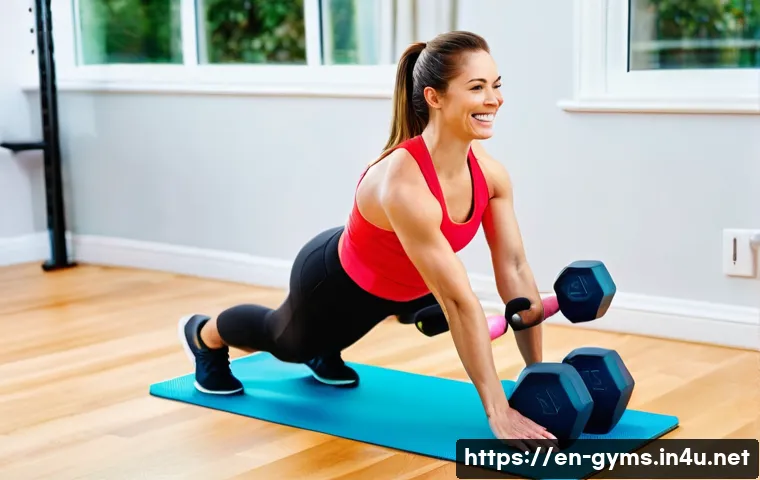
If I had to pick one essential combo for a home gym chest workout, it would hands-down be an adjustable bench and a decent set of dumbbells. Seriously, the versatility is unmatched.
You can hit flat, incline, and even decline presses, all with just these two pieces of equipment. Plus, dumbbells allow for a more natural range of motion and engage those crucial stabilizer muscles that sometimes get a holiday on fixed machines.
I still have days where I prefer a dumbbell press for the sheer freedom of movement and the deep stretch I can achieve. It’s a classic for a reason, and it continues to be one of the most effective and space-efficient ways to build a powerful chest.
If you’re just starting your home gym journey or looking to maximize your limited space, this duo is truly your best friend.
Form First: Master Your Movement for Maximum Gains
The Mind-Muscle Connection: Feeling the Burn Where It Counts
I cannot stress this enough: impeccable form trumps heavy weight every single time. It’s not about how much you can lift; it’s about how effectively you’re making your chest muscles do the work.
For years, I was guilty of ego lifting, pushing weight I couldn’t quite control, and my shoulders and triceps would often take over. My chest? Not so much.
It was a real “aha!” moment for me when I finally slowed down, lightened the weight, and truly focused on the mind-muscle connection. I learned to squeeze my pecs on every rep, feel that stretch, and control the weight throughout the entire movement.
The results were immediate and incredibly satisfying – a deeper burn, better pump, and eventually, far more noticeable growth in my chest than when I was just throwing weight around.
Trust me, slow down, focus, and feel the magic happen.
Avoiding Common Pitfalls: Protecting Your Shoulders
Our shoulders are incredibly complex and, unfortunately, quite vulnerable, especially during chest presses. I’ve definitely had my share of shoulder niggles from poor form, and it’s a miserable experience that can derail your progress for weeks.
One of the biggest mistakes I see (and used to make myself!) is letting the shoulders roll forward or shrugging them up during the press. To avoid this, always focus on keeping your shoulder blades retracted and slightly depressed – imagine tucking them into your back pockets.
A slight arch in your lower back can also help position your chest better and prevent undue stress on the shoulders. And please, don’t lock out your elbows aggressively at the top of the movement; keep a slight bend to protect those joints.
Learning these small but critical adjustments transformed my pressing safety and effectiveness.
Making Your Investment Count: Key Factors Before You Buy
Considering Your Budget and Space: Real-World Choices
Alright, let’s talk real-world considerations, because choosing a chest press machine isn’t just about what looks cool or what the pros use. It really boils down to two practical giants: your budget and the space you actually have available.
I once splurged on a fantastic piece of equipment that, in hindsight, was just too large for my home gym, and I ended up reselling it at a loss. It was a tough lesson!
Think honestly about your finances – are you looking for a budget-friendly option that gets the job done, or are you ready to invest in a premium, commercial-grade machine?
Then, measure your space meticulously. A machine might look compact online, but you also need room to load plates, move around it, and perform the exercise comfortably.
Making smart, practical choices based on these factors will prevent buyer’s remorse and ensure your investment truly serves your fitness journey.
Durability and Ergonomics: Don’t Compromise on Quality
When you’re shelling out your hard-earned cash for fitness equipment, you want it to last, right? That’s why durability and ergonomics are non-negotiables in my book.
I’ve had experiences with cheaper machines that felt rickety, had sticky moving parts, or just plain broke down within a year. Trust me, it’s not worth the frustration or the potential safety risk.
Look for sturdy frame construction, smooth bearings, and high-quality upholstery. Equally important is ergonomics – how does the machine feel when you sit in it?
Are the handles positioned naturally? Does the range of motion feel comfortable for your joints? A machine that feels awkward or causes discomfort is one you’re less likely to use consistently.
Always try before you buy if possible, or read detailed reviews about the comfort and feel. Your body will thank you for investing in quality that supports proper form and long-term use.
글을 마치며
We’ve covered a lot today, from the brute force of plate-loaded machines to the precision of cables, and even how to make the most of your home gym. My hope is that you now feel a little less overwhelmed and a lot more empowered to make choices that truly serve your body and your fitness goals. This journey of building a stronger, more defined chest is a personal one, filled with experimentation and learning what truly resonates with you. Remember, it’s not about what everyone else is doing, but about discovering what makes *you* feel strong, confident, and excited to hit the gym.
알아두면 쓸모 있는 정보
1. Always prioritize a thorough warm-up, especially for your shoulders and rotator cuffs, before any chest workout. It helps prevent injury and primes your muscles for optimal performance. Trust me, a few extra minutes here save a lot of pain later!
2. Don’t underestimate the power of progressive overload. Consistently challenge your muscles by gradually increasing weight, reps, or sets to continue seeing gains. Sticking to the same routine without progression will lead to plateaus, and nobody wants that.
3. Recovery is just as crucial as the workout itself. Ensure you’re getting adequate sleep, proper nutrition, and hydration. Your muscles grow and repair when you rest, not when you’re lifting. It’s a holistic approach to real growth.
4. If you feel persistent pain (not just muscle soreness), listen to your body and consult a professional. Pushing through acute pain can lead to serious injuries and set back your progress significantly. Your long-term health is paramount.
5. Consider trying out a day pass at different gyms in your area. This allows you to experience a wider variety of chest press machines and equipment, helping you discover what you truly enjoy and what works best for your physique and goals without commitment.
중요 사항 정리
Ultimately, finding the ‘best’ chest press machine is a deeply personal quest. It’s about understanding your body, experimenting with different modalities, and focusing on perfect form over heavy weight. Whether you gravitate towards the raw power of plate-loaded, the convenience of pin-loaded, or the versatility of dumbbells and cables, ensure your choice aligns with your goals, respects your budget and space, and supports safe, effective training. Listen to your body, stay consistent, and enjoy the journey to a stronger, more sculpted chest.
Frequently Asked Questions (FAQ) 📖
Q: I’m just starting out, and the gym can be intimidating. Which chest press machine is the safest and easiest to use for a newbie like me?
A:
I totally get that feeling of walking into a gym and seeing all these different machines, wondering where to even start! When I first began my fitness journey, I felt the exact same way.
For someone just starting out, or if you’re setting up a home gym and want something super straightforward, my absolute top recommendation is the Seated Machine Chest Press with a selectorized weight stack.
Why? Because it’s incredibly user-friendly and, most importantly, super safe. Here’s the deal: with a selectorized machine, you just slide a pin into the weight stack to pick your resistance – no fussing with loading heavy plates, which can be a bit daunting when you’re new.
The machine itself guides your movement in a fixed path, which means you don’t have to worry as much about balancing the weight or getting your form perfectly right from day one, like you would with dumbbells or a barbell.
This fixed path significantly reduces the risk of injury, allowing you to focus purely on feeling your chest muscles work. When I first started, having that structured movement really helped me build confidence and understand what a proper chest contraction felt like without the added stress of stabilizing the weight.
It’s a fantastic way to build foundational strength and perfect your mind-muscle connection before moving on to more complex movements. Plus, most of these machines have adjustable seats and handles, so you can easily customize it to fit your body perfectly, ensuring maximum comfort and effectiveness.
Q: There are so many different kinds! What’s the real difference between a machine where you load plates and one with a pin and stack?
A:
Oh, this is a question I’ve pondered countless times myself! It really boils down to two main types: the selectorized (pin-and-stack) machines and the plate-loaded machines.
And let me tell you, while both can help you build an impressive chest, they offer distinctly different experiences. Selectorized machines, as I mentioned, are those convenient ones where you just pop a pin into a weight stack.
They’re fantastic for quick weight changes, which is a huge plus if you’re doing supersets, drop sets, or just need to adjust on the fly. I find them incredibly convenient, especially during busy gym times when you don’t want to hog a bunch of plates.
They offer a very controlled, predictable movement path, which is excellent for isolating your chest muscles and ensuring consistent form. Now, plate-loaded machines are a whole different beast.
These are the ones where you physically load standard Olympic plates onto the machine. My personal experience with plate-loaded machines has been that they often feel a lot more “free weight-like” even though you’re still in a machine.
They tend to have a slightly less restrictive movement path compared to their selectorized cousins, allowing for a more natural range of motion that often feels better on your joints.
Many people, myself included, find that plate-loaded machines engage more stabilizing muscles because you’re managing the weight a bit more. Plus, the feel of adding those heavy plates just feels more intense and satisfying, if you know what I mean!
If you’re really pushing for strength gains and want a more “organic” feel from a machine, plate-loaded might be your jam. It truly depends on your preference and what you’re trying to achieve with your workout – convenience and isolation or a more compound, free-weight-like feel.
Q: I’ve been using a chest press machine but I’m not really feeling it in my chest, or worse, my shoulders hurt!
A: m I doing something wrong?
A3:
Ugh, that’s such a frustrating feeling, isn’t it? Trust me, you are absolutely not alone in this! I’ve been there, staring at myself in the gym mirror, wondering why my shoulders were screaming instead of my chest.
It’s incredibly common to accidentally shift the focus to your shoulders or triceps if your form isn’t quite dialed in. Here’s what I’ve found makes a massive difference:First, check your setup.
Make sure the seat height is adjusted so that the handles are roughly at mid-chest level when you’re seated. If they’re too high, your shoulders will take over; too low, and you might not get a full range of motion.
Second, and this is a game-changer: retract and depress your shoulder blades. Imagine you’re trying to tuck your shoulder blades into your back pockets.
This creates a stable base for your chest to work from and keeps your shoulders out of the movement. When I started focusing on really “pinching” my shoulder blades together before pressing, it was like a lightbulb went off – suddenly, I could actually feel my chest muscles engaging in a way I hadn’t before.
Third, don’t just push the weight, squeeze your chest. Think about actively contracting your pecs throughout the entire movement, especially as you press the handles forward and together.
At the top of the movement, give your chest a good squeeze! This mind-muscle connection is vital. Also, make sure you’re not locking out your elbows completely at the top; keep a slight bend to maintain tension on your chest.
And finally, if your shoulders are still hurting, you might be going too heavy. Ego lifting is real, but it’s a fast track to injury. Lower the weight, focus on perfect form, and really try to feel your chest doing the work.
Sometimes, a smaller range of motion initially, with impeccable form, is far more effective than a full range with sloppy execution. Give these tips a try – I bet you’ll start feeling that glorious chest pump in no time!