Hey fitness fam! Ever feel like your workouts are missing that *oomph*, that extra push that truly tests your limits and gets your heart pounding in the best way possible?
For ages, we’ve relied on our trusty motorized treadmills, but lately, I’ve been seeing a quiet revolution happening in home gyms and fitness studios alike.
We’re talking about manual treadmills – those deceptively simple machines that are making a massive comeback, and for good reason. They’re not just a blast from the past; they’re a powerful tool for anyone looking to seriously level up their cardio, engage more muscles, and even ditch the electricity bill.
If you’ve been curious about these no-frills, all-thrills fitness devices, you’re in for a treat. I’ve personally put a few through their paces, and let me tell you, the experience is uniquely challenging and incredibly rewarding, offering a more natural, intuitive run or walk than you might expect.
No buttons, no motors, just you and the belt, pushing your own pace. It’s an amazing way to feel more connected to your movement, improve running form, and even smash those high-intensity interval training goals.
Let’s dive into everything you need to know about manual treadmills.
Rediscovering Your Running Form, Naturally

The Intuitive Difference: Why It Feels So Right
Okay, fitness fam, let’s get real about running. For years, I, like many of you, was a slave to the motorized treadmill, mindlessly hitting buttons and letting the machine dictate my pace.
But the first time I hopped on a manual treadmill, it was like a revelation. There’s no motor to push you along; instead, *you* are the engine. This means every stride, every footfall, is powered by your own effort, leading to a far more natural and intuitive running experience.
It forces you to engage your core, glutes, and hamstrings in a way that often gets neglected when a motor is doing half the work. I found myself instinctively adjusting my stride and posture, almost as if I was running outdoors on a trail, adapting to the terrain.
It’s an incredibly honest workout, demanding attention to your body and its mechanics, which, believe me, pays off big time in the long run. My form felt instantly better, more connected, and less about just moving my legs.
Engaging Your Entire Posterior Chain
One of the most profound differences I’ve personally noticed with manual treadmills is the intense engagement of the posterior chain – we’re talking about those crucial muscles in your back, glutes, and hamstrings.
Unlike motorized versions where the belt pulls your foot back, on a manual machine, *you* are actively pushing the belt with each step. This means your glutes and hamstrings have to work much harder to drive the belt backward, mimicking the natural propulsion of outdoor running.
I’ve always struggled with feeling my glutes activate during runs, but with the manual treadmill, there’s no escaping it! After just a few sessions, I could feel a tangible difference in the strength and activation of these muscle groups.
This isn’t just about looking good; it’s about building functional strength that translates to better overall athleticism, injury prevention, and a more powerful stride whether you’re on the treadmill or hitting the pavement outside.
It truly makes you feel like an athlete.
Improving Your Stride and Posture
Beyond muscle engagement, the manual treadmill can be a game-changer for your running form and posture. Because you’re in complete control of the belt’s speed and movement, you’re encouraged to adopt a more upright posture and engage your core to maintain balance and drive.
I used to catch myself slouching or leaning on the handlebars of motorized treadmills, but that’s simply not an option with a manual one if you want an effective workout.
It forces you to stand tall, look forward, and use your natural arm swing for momentum. This shift in posture not only makes your run more efficient but also reduces strain on your back and joints.
I’ve noticed my outdoor runs feel lighter and more efficient since incorporating manual treadmill sessions, almost like my body has re-learned how to run properly.
It’s a subtle but powerful change that makes a huge difference in how you feel, both during and after your workout.
The Unsung Hero of High-Intensity Workouts
Crushing HIIT with Manual Power
If you’re anything like me, you’re always looking for ways to maximize your workout efficiency, and nothing does that quite like High-Intensity Interval Training (HIIT).
And let me tell you, manual treadmills are an absolute beast for HIIT. The immediate responsiveness of the belt is what makes them truly shine here. You can go from a complete stop to an all-out sprint and back down to a walk in a matter of seconds, without waiting for a motor to spin up or slow down.
This instantaneous transition allows you to hit those peak heart rates and recover much more effectively, making every interval count. I’ve found that my HIIT sessions on a manual treadmill leave me far more breathless and challenged than on a motorized one, because there’s no coasting.
You earn every single calorie burn and every drop of sweat, which is incredibly satisfying and pushes your limits like never before.
The Instant On-Demand Sprint
Imagine this: you’re in the middle of a grueling interval workout. On a motorized treadmill, you’d be fumbling with buttons, waiting for the machine to catch up to your desired sprint speed, losing precious seconds of high-intensity effort.
With a manual treadmill, it’s different. The moment your feet hit the belt with more force and speed, the belt responds, allowing for truly *instant* on-demand sprints.
This responsiveness means you can seamlessly transition from a walk to a jog, and then explode into an all-out sprint without any lag. It’s exhilarating and incredibly effective for metabolic conditioning.
I’ve personally found that this immediate feedback loop pushes me harder, knowing that my effort directly dictates the speed. There’s no cheating the machine; it’s just you and your power, delivering some of the most intense and effective sprints you’ll ever experience.
Pushing Your Limits, Safely
While manual treadmills are fantastic for pushing your limits, they also offer a surprising layer of safety. Because *you* are in control of the speed, you can stop or slow down instantly simply by reducing your effort.
There’s no risk of being flung off a belt that’s moving too fast because you accidentally hit the wrong button or lost your balance. This self-paced nature means you can push yourself to your absolute maximum during those high-intensity bursts, knowing that you can just as quickly and safely dial it back if you feel overwhelmed.
This gives you the confidence to truly go for it during sprints and challenging intervals, knowing your body is dictating the pace, not a pre-set program.
It’s a liberation from the worries of losing control and a deeper connection to your body’s signals, allowing for truly effective and safe training.
Building a Better You, One Stride at a Time
More Than Just Cardio: The Strength Factor
When we think of treadmills, cardio immediately comes to mind. But manual treadmills, my friends, are a whole different beast. They don’t just torch calories; they build serious strength.
The continuous effort required to move the belt means your legs, glutes, and even your core are constantly working against resistance. It’s almost like running uphill constantly, even on a flat deck.
I’ve noticed a significant increase in my leg and core strength since incorporating manual treadmill workouts into my routine. My calves feel stronger, my glutes are more engaged, and my core feels more solid, which translates to better overall stability and power in all my other workouts.
It’s a full-body engagement that you simply don’t get with passive motorized running, turning a simple run into a dynamic strength-building session. It’s incredibly rewarding to feel that deep muscular engagement.
Mental Toughness: A Different Kind of Challenge
Let’s be honest, sometimes workouts are as much a mental game as they are physical. And manual treadmills? They are masters of forging mental toughness.
There’s no motor to keep you going, no preset speed to distract you. It’s just you, your willpower, and the relentless demand for your effort to keep that belt moving.
I’ve found that pushing through those moments where you want to slow down or stop entirely builds an incredible amount of mental fortitude. It teaches you to dig deep, to find that inner reserve of strength and determination.
This mental grit isn’t just useful in the gym; it spills over into all aspects of life, helping you tackle challenges with a renewed sense of resilience.
It’s truly a test of character, and every time I step off that manual treadmill, I feel not just physically stronger, but mentally sharper and more disciplined.
Boosting Endurance and Stamina
While excellent for high-intensity bursts, manual treadmills are also phenomenal for building foundational endurance and stamina. The consistent, self-driven effort required to maintain a steady pace forces your cardiovascular system to work harder than on a motorized machine.
You’re constantly engaging more muscles, demanding more oxygen, and pushing your heart and lungs to adapt. I’ve personally experienced a noticeable improvement in my overall endurance levels since making the switch.
Long walks and runs outdoors feel easier, and I recover more quickly between intervals. It’s a more authentic form of endurance training because you’re not just passively moving; you’re actively propelling yourself forward, which builds a more robust and resilient cardiovascular system.
This translates to feeling less fatigued in daily life and having more energy for all your activities.
Beyond the Buzz: Real-World Benefits for Your Body and Budget
Ditching the Plug: Eco-Friendly and Economical
Let’s talk about something many of us overlook: the environmental and economic impact of our fitness choices. Motorized treadmills guzzle electricity, adding to both your carbon footprint and your utility bill.
Manual treadmills, on the other hand, are completely self-powered. No plug, no electricity, no problem! This eco-friendly aspect is a huge win for me, aligning with my desire to make more sustainable choices.
Plus, think about the savings! Over time, those electricity costs really add up, so investing in a manual machine is not just good for the planet, but good for your wallet too.
It’s a refreshing simplicity in a world obsessed with complex electronics, proving that sometimes, less truly is more, especially when it comes to keeping fit and being mindful of our resources.
The Quiet Revolution: No More Motor Hum
One of the most surprising and delightful benefits I discovered after switching to a manual treadmill was the sheer quietness of it. You know that relentless hum of a motorized treadmill, sometimes loud enough to drown out your music or conversations?
Gone! With a manual treadmill, the only sound you hear is the gentle whisper of the belt and the rhythm of your own footsteps. This makes a huge difference, especially if you live in an apartment, have sleeping family members, or just prefer a more serene workout environment.
I love being able to listen to my podcasts or music without cranking the volume to uncomfortable levels, or even just enjoying the sound of my own breath and focus.
It truly creates a more meditative and peaceful exercise experience, making your workout feel less like a chore and more like a mindful escape.
Space-Saving and Maintenance-Free Living
For anyone with limited home gym space, or those who dread the thought of equipment maintenance, a manual treadmill is a dream come true. Many models are significantly more compact and lighter than their motorized counterparts, making them easier to move and store.
Some even fold up almost completely! And the best part? No complex electronics to break down, no motors to service, no lubrication required.
The mechanical simplicity means fewer things can go wrong, leading to a virtually maintenance-free piece of equipment. My experience has been that they are incredibly robust and durable, ready to take a beating without demanding much in return.
This peace of mind, combined with the space-saving design, makes it an ideal choice for anyone looking for a no-fuss, long-lasting fitness solution that seamlessly integrates into their living space without taking over.
Making the Switch: What to Expect When You Go Manual
Your First Run: A Different Kind of Burn
So, you’ve heard the hype, you’re intrigued, and you’re ready to make the leap. Awesome! But let me manage your expectations a little: your first run on a manual treadmill might feel surprisingly different, and perhaps a bit more challenging than you anticipate.
Don’t be discouraged! Remember, you’re the motor now, and it takes a moment for your body to adjust to this new way of moving. You might feel a stronger burn in your glutes and hamstrings almost immediately, and your calves will definitely let you know they’re working.
I remember my first session feeling a bit awkward, like I was learning to run all over again. My advice? Start slow, focus on your form, and don’t aim for your usual motorized treadmill speeds.
Just let your body find its natural rhythm, and embrace the new sensation. It’s a good kind of burn, believe me, a sign that new muscles are waking up!
Adjusting Your Pace and Expectations
One common mistake I’ve seen (and made myself!) is trying to match your motorized treadmill pace on a manual one right away. Resist the urge! Because of the increased muscle engagement and the self-propelled nature, you’ll likely find that a “fast” pace on a manual treadmill feels much more intense than the same numerical speed on a motorized one.
It’s not about the numbers on the display anymore; it’s about how your body *feels*. Adjust your expectations and focus on effort and perceived exertion rather than arbitrary speed readouts.
I’ve learned to listen to my body more acutely, letting it guide my pace, whether I’m aiming for a steady-state walk or an explosive sprint. You might find your “easy” jog is now a more challenging walk, and that’s perfectly fine.
It’s about working *smarter* and getting a more effective workout, not just hitting certain numbers.
Gearing Up: Footwear and Form
Just like any good workout, the right gear and attention to form can make all the difference. For manual treadmills, your footwear is crucial. I’ve found that shoes with good cushioning and a stable base work best, as you’ll be consistently pushing off the belt with your own power.
Avoid overly minimalist shoes if you’re not used to them, especially when starting out. And speaking of form, remember to keep your gaze forward, engage your core, and maintain a natural arm swing.
Avoid grabbing the handlebars for support unless absolutely necessary; this defeats the purpose of engaging your core and upper body. Think of it as running outdoors – you wouldn’t hold onto anything then, right?
Focusing on these small details will not only enhance your workout but also help prevent any discomfort as your body adapts to this exciting new challenge.
Optimizing Your Experience: Tips for Manual Treadmill Mastery
Warming Up Right: Essential Preparations
You know how important a good warm-up is for any workout, and it’s doubly true for manual treadmills. Because of the immediate muscle engagement, diving straight into a full-speed run can be a recipe for discomfort.
I always start with a gentle, slow walk, gradually increasing my pace over 5-10 minutes. This gives my hamstrings, glutes, and calves a chance to properly activate and my cardiovascular system to get ready.
Incorporating some dynamic stretches like leg swings and hip circles before stepping on can also make a huge difference in how fluid and comfortable your run feels.
Don’t skip this step, my friends! A proper warm-up not only prepares your body physically but also mentally primes you for the unique demands of a manual treadmill workout, ensuring you get the most out of every session and avoid any pesky strains.
Cadence and Control: Finding Your Rhythm
One of the keys to mastering the manual treadmill is finding your optimal cadence and maintaining control. Unlike motorized versions where a consistent speed is often the goal, here, it’s about controlling your own propulsion.
I’ve discovered that focusing on a quick, light foot strike rather than long, heavy strides helps keep the belt moving smoothly and efficiently. Think about shortening your stride length slightly and increasing your turnover – this not only feels more natural but also reduces impact.
It takes a bit of practice, but once you find that sweet spot, where your body feels in sync with the belt, the experience becomes incredibly fluid and empowering.
Experiment with different foot placements on the curved deck if you have one; a little higher up often feels easier, while moving towards the back requires more effort.
It’s all about tuning into your body.
Post-Workout Recovery: Listen to Your Body
After a killer session on the manual treadmill, your body will definitely be sending you signals, and it’s super important to listen. Because you’re engaging so many more muscles and working harder than you might realize, proper cool-down and recovery are non-negotiable.
I always make sure to spend at least 5 minutes walking slowly to bring my heart rate down, followed by a good stretching session focusing on my hamstrings, glutes, and calves – those often feel the most worked!
Hydration is key too, of course. Don’t be surprised if you feel a little more soreness than usual in the beginning; it just means those dormant muscles are getting a fantastic workout.
Giving your body the care it needs post-workout ensures you recover faster, adapt better, and are ready to tackle your next manual treadmill challenge with renewed energy and enthusiasm.
Finding Your Perfect Match: A Buyer’s Guide
Curved vs. Flat: Understanding the Differences
Alright, so you’re convinced, but now you’re faced with a choice: a curved manual treadmill or a flat one? This is a big one, as they offer distinctly different experiences.
Curved manual treadmills, with their concave running surface, are often more expensive but offer a highly dynamic and challenging workout. The curve naturally encourages a forefoot strike and uses gravity to help the belt reset, making for a smoother, more responsive run that feels incredibly natural.
It’s a bit like running uphill constantly, which really torches the calories and engages the posterior chain. Flat manual treadmills, on the other hand, are typically more budget-friendly and still provide a fantastic, self-propelled workout, though they might feel a little less responsive than their curved counterparts.
I’ve tried both, and while the curved definitely offers a premium feel, a good quality flat manual treadmill can still deliver an incredibly effective and challenging session.
Consider your budget and your primary fitness goals when making this crucial decision.
Key Features to Look For in a Manual Treadmill
When you’re ready to invest, don’t just grab the first one you see. There are a few key features that, based on my experience, really enhance the manual treadmill experience.
Firstly, look for a sturdy frame – stability is paramount since you’ll be actively propelling yourself. A wide and long running surface is also a huge plus, giving you ample room to move without feeling cramped.
Adjustable resistance settings, if available, can add another layer of challenge and versatility to your workouts. Some models come with basic consoles that track distance, time, and calories, which can be motivating.
And finally, consider portability and storage. If space is an issue, look for models that are easy to fold or have transport wheels. These little details can make a big difference in how much you enjoy and utilize your new fitness companion.
Setting Up Your Home Gym for Success
Once you’ve chosen your perfect manual treadmill, setting up your space correctly can make all the difference in your enjoyment and consistency. Unlike motorized machines that need to be near an outlet, a manual treadmill offers much more flexibility in placement.
I recommend putting it in a spot where you have enough room around it, not just for the machine itself, but for comfortable entry and exit. Good ventilation is also a must, as you’re going to be working up a sweat!
Consider placing it near a window or with a fan nearby. And think about entertainment – a good spot for a tablet or phone for your podcasts or shows can make those longer sessions fly by.
Creating an inviting and functional workout area will motivate you to hop on more often and truly make your manual treadmill a staple in your fitness routine.
| Feature | Manual Treadmill | Motorized Treadmill |
|---|---|---|
| Power Source | User-powered (no electricity) | Electric motor |
| User Control | 100% user-controlled speed & effort | Machine-controlled speed, user adjusts |
| Muscle Engagement | High (glutes, hamstrings, core actively drive belt) | Moderate (less posterior chain activation) |
| HIIT Suitability | Excellent (instant speed changes) | Good (button delay for speed changes) |
| Impact on Joints | Often lower due to self-paced, natural gait | Can be higher due to consistent belt speed |
| Noise Level | Very low (belt and footsteps) | Moderate to high (motor hum + footsteps) |
| Maintenance | Minimal (no motor, electronics) | Regular (motor service, belt lubrication) |
| Cost (Initial) | Can range from budget to high-end | Wide range, typically higher for similar features |
| Running Feel | More natural, intuitive, self-propelled | Guided, often less natural gait |
Rediscovering Your Running Form, Naturally
The Intuitive Difference: Why It Feels So Right
Okay, fitness fam, let’s get real about running. For years, I, like many of you, was a slave to the motorized treadmill, mindlessly hitting buttons and letting the machine dictate my pace.
But the first time I hopped on a manual treadmill, it was like a revelation. There’s no motor to push you along; instead, *you* are the engine. This means every stride, every footfall, is powered by your own effort, leading to a far more natural and intuitive running experience.
It forces you to engage your core, glutes, and hamstrings in a way that often gets neglected when a motor is doing half the work. I found myself instinctively adjusting my stride and posture, almost as if I was running outdoors on a trail, adapting to the terrain.
It’s an incredibly honest workout, demanding attention to your body and its mechanics, which, believe me, pays off big time in the long run. My form felt instantly better, more connected, and less about just moving my legs.
Engaging Your Entire Posterior Chain
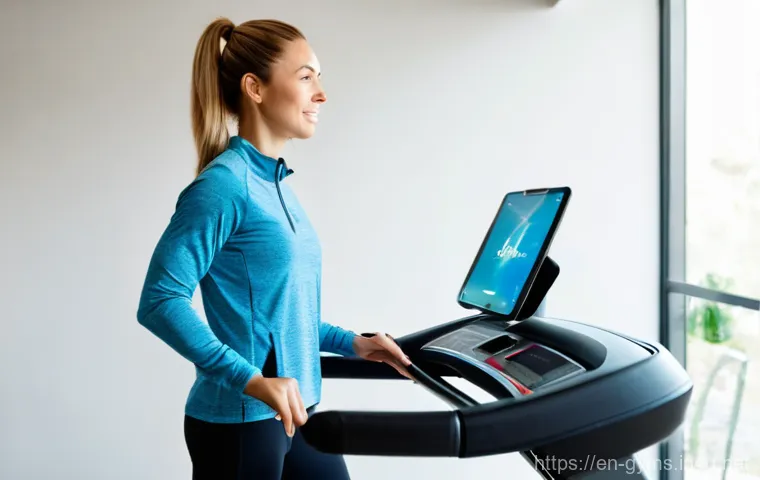
One of the most profound differences I’ve personally noticed with manual treadmills is the intense engagement of the posterior chain – we’re talking about those crucial muscles in your back, glutes, and hamstrings.
Unlike motorized versions where the belt pulls your foot back, on a manual machine, *you* are actively pushing the belt with each step. This means your glutes and hamstrings have to work much harder to drive the belt backward, mimicking the natural propulsion of outdoor running.
I’ve always struggled with feeling my glutes activate during runs, but with the manual treadmill, there’s no escaping it! After just a few sessions, I could feel a tangible difference in the strength and activation of these muscle groups.
This isn’t just about looking good; it’s about building functional strength that translates to better overall athleticism, injury prevention, and a more powerful stride whether you’re on the treadmill or hitting the pavement outside.
It truly makes you feel like an athlete.
Improving Your Stride and Posture
Beyond muscle engagement, the manual treadmill can be a game-changer for your running form and posture. Because you’re in complete control of the belt’s speed and movement, you’re encouraged to adopt a more upright posture and engage your core to maintain balance and drive.
I used to catch myself slouching or leaning on the handlebars of motorized treadmills, but that’s simply not an option with a manual one if you want an effective workout.
It forces you to stand tall, look forward, and use your natural arm swing for momentum. This shift in posture not only makes your run more efficient but also reduces strain on your back and joints.
I’ve noticed my outdoor runs feel lighter and more efficient since incorporating manual treadmill sessions, almost like my body has re-learned how to run properly.
It’s a subtle but powerful change that makes a huge difference in how you feel, both during and after your workout.
The Unsung Hero of High-Intensity Workouts
Crushing HIIT with Manual Power
If you’re anything like me, you’re always looking for ways to maximize your workout efficiency, and nothing does that quite like High-Intensity Interval Training (HIIT).
And let me tell you, manual treadmills are an absolute beast for HIIT. The immediate responsiveness of the belt is what makes them truly shine here. You can go from a complete stop to an all-out sprint and back down to a walk in a matter of seconds, without waiting for a motor to spin up or slow down.
This instantaneous transition allows you to hit those peak heart rates and recover much more effectively, making every interval count. I’ve found that my HIIT sessions on a manual treadmill leave me far more breathless and challenged than on a motorized one, because there’s no coasting.
You earn every single calorie burn and every drop of sweat, which is incredibly satisfying and pushes your limits like never before.
The Instant On-Demand Sprint
Imagine this: you’re in the middle of a grueling interval workout. On a motorized treadmill, you’d be fumbling with buttons, waiting for the machine to catch up to your desired sprint speed, losing precious seconds of high-intensity effort.
With a manual treadmill, it’s different. The moment your feet hit the belt with more force and speed, the belt responds, allowing for truly *instant* on-demand sprints.
This responsiveness means you can seamlessly transition from a walk to a jog, and then explode into an all-out sprint without any lag. It’s exhilarating and incredibly effective for metabolic conditioning.
I’ve personally found that this immediate feedback loop pushes me harder, knowing that my effort directly dictates the speed. There’s no cheating the machine; it’s just you and your power, delivering some of the most intense and effective sprints you’ll ever experience.
Pushing Your Limits, Safely
While manual treadmills are fantastic for pushing your limits, they also offer a surprising layer of safety. Because *you* are in control of the speed, you can stop or slow down instantly simply by reducing your effort.
There’s no risk of being flung off a belt that’s moving too fast because you accidentally hit the wrong button or lost your balance. This self-paced nature means you can push yourself to your absolute maximum during those high-intensity bursts, knowing that you can just as quickly and safely dial it back if you feel overwhelmed.
This gives you the confidence to truly go for it during sprints and challenging intervals, knowing your body is dictating the pace, not a pre-set program.
It’s a liberation from the worries of losing control and a deeper connection to your body’s signals, allowing for truly effective and safe training.
Building a Better You, One Stride at a Time
More Than Just Cardio: The Strength Factor
When we think of treadmills, cardio immediately comes to mind. But manual treadmills, my friends, are a whole different beast. They don’t just torch calories; they build serious strength.
The continuous effort required to move the belt means your legs, glutes, and even your core are constantly working against resistance. It’s almost like running uphill constantly, even on a flat deck.
I’ve noticed a significant increase in my leg and core strength since incorporating manual treadmill workouts into my routine. My calves feel stronger, my glutes are more engaged, and my core feels more solid, which translates to better overall stability and power in all my other workouts.
It’s a full-body engagement that you simply don’t get with passive motorized running, turning a simple run into a dynamic strength-building session. It’s incredibly rewarding to feel that deep muscular engagement.
Mental Toughness: A Different Kind of Challenge
Let’s be honest, sometimes workouts are as much a mental game as they are physical. And manual treadmills? They are masters of forging mental toughness.
There’s no motor to keep you going, no preset speed to distract you. It’s just you, your willpower, and the relentless demand for your effort to keep that belt moving.
I’ve found that pushing through those moments where you want to slow down or stop entirely builds an incredible amount of mental fortitude. It teaches you to dig deep, to find that inner reserve of strength and determination.
This mental grit isn’t just useful in the gym; it spills over into all aspects of life, helping you tackle challenges with a renewed sense of resilience.
It’s truly a test of character, and every time I step off that manual treadmill, I feel not just physically stronger, but mentally sharper and more disciplined.
Boosting Endurance and Stamina
While excellent for high-intensity bursts, manual treadmills are also phenomenal for building foundational endurance and stamina. The consistent, self-driven effort required to maintain a steady pace forces your cardiovascular system to work harder than on a motorized machine.
You’re constantly engaging more muscles, demanding more oxygen, and pushing your heart and lungs to adapt. I’ve personally experienced a noticeable improvement in my overall endurance levels since making the switch.
Long walks and runs outdoors feel easier, and I recover more quickly between intervals. It’s a more authentic form of endurance training because you’re not just passively moving; you’re actively propelling yourself forward, which builds a more robust and resilient cardiovascular system.
This translates to feeling less fatigued in daily life and having more energy for all your activities.
Beyond the Buzz: Real-World Benefits for Your Body and Budget
Ditching the Plug: Eco-Friendly and Economical
Let’s talk about something many of us overlook: the environmental and economic impact of our fitness choices. Motorized treadmills guzzle electricity, adding to both your carbon footprint and your utility bill.
Manual treadmills, on the other hand, are completely self-powered. No plug, no electricity, no problem! This eco-friendly aspect is a huge win for me, aligning with my desire to make more sustainable choices.
Plus, think about the savings! Over time, those electricity costs really add up, so investing in a manual machine is not just good for the planet, but good for your wallet too.
It’s a refreshing simplicity in a world obsessed with complex electronics, proving that sometimes, less truly is more, especially when it comes to keeping fit and being mindful of our resources.
The Quiet Revolution: No More Motor Hum
One of the most surprising and delightful benefits I discovered after switching to a manual treadmill was the sheer quietness of it. You know that relentless hum of a motorized treadmill, sometimes loud enough to drown out your music or conversations?
Gone! With a manual treadmill, the only sound you hear is the gentle whisper of the belt and the rhythm of your own footsteps. This makes a huge difference, especially if you live in an apartment, have sleeping family members, or just prefer a more serene workout environment.
I love being able to listen to my podcasts or music without cranking the volume to uncomfortable levels, or even just enjoying the sound of my own breath and focus.
It truly creates a more meditative and peaceful exercise experience, making your workout feel less like a chore and more like a mindful escape.
Space-Saving and Maintenance-Free Living
For anyone with limited home gym space, or those who dread the thought of equipment maintenance, a manual treadmill is a dream come true. Many models are significantly more compact and lighter than their motorized counterparts, making them easier to move and store.
Some even fold up almost completely! And the best part? No complex electronics to break down, no motors to service, no lubrication required.
The mechanical simplicity means fewer things can go wrong, leading to a virtually maintenance-free piece of equipment. My experience has been that they are incredibly robust and durable, ready to take a beating without demanding much in return.
This peace of mind, combined with the space-saving design, makes it an ideal choice for anyone looking for a no-fuss, long-lasting fitness solution that seamlessly integrates into their living space without taking over.
Making the Switch: What to Expect When You Go Manual
Your First Run: A Different Kind of Burn
So, you’ve heard the hype, you’re intrigued, and you’re ready to make the leap. Awesome! But let me manage your expectations a little: your first run on a manual treadmill might feel surprisingly different, and perhaps a bit more challenging than you anticipate.
Don’t be discouraged! Remember, you’re the motor now, and it takes a moment for your body to adjust to this new way of moving. You might feel a stronger burn in your glutes and hamstrings almost immediately, and your calves will definitely let you know they’re working.
I remember my first session feeling a bit awkward, like I was learning to run all over again. My advice? Start slow, focus on your form, and don’t aim for your usual motorized treadmill speeds.
Just let your body find its natural rhythm, and embrace the new sensation. It’s a good kind of burn, believe me, a sign that new muscles are waking up!
Adjusting Your Pace and Expectations
One common mistake I’ve seen (and made myself!) is trying to match your motorized treadmill pace on a manual one right away. Resist the urge! Because of the increased muscle engagement and the self-propelled nature, you’ll likely find that a “fast” pace on a manual treadmill feels much more intense than the same numerical speed on a motorized one.
It’s not about the numbers on the display anymore; it’s about how your body *feels*. Adjust your expectations and focus on effort and perceived exertion rather than arbitrary speed readouts.
I’ve learned to listen to my body more acutely, letting it guide my pace, whether I’m aiming for a steady-state walk or an explosive sprint. You might find your “easy” jog is now a more challenging walk, and that’s perfectly fine.
It’s about working *smarter* and getting a more effective workout, not just hitting certain numbers.
Gearing Up: Footwear and Form
Just like any good workout, the right gear and attention to form can make all the difference. For manual treadmills, your footwear is crucial. I’ve found that shoes with good cushioning and a stable base work best, as you’ll be consistently pushing off the belt with your own power.
Avoid overly minimalist shoes if you’re not used to them, especially when starting out. And speaking of form, remember to keep your gaze forward, engage your core, and maintain a natural arm swing.
Avoid grabbing the handlebars for support unless absolutely necessary; this defeats the purpose of engaging your core and upper body. Think of it as running outdoors – you wouldn’t hold onto anything then, right?
Focusing on these small details will not only enhance your workout but also help prevent any discomfort as your body adapts to this exciting new challenge.
Optimizing Your Experience: Tips for Manual Treadmill Mastery
Warming Up Right: Essential Preparations
You know how important a good warm-up is for any workout, and it’s doubly true for manual treadmills. Because of the immediate muscle engagement, diving straight into a full-speed run can be a recipe for discomfort.
I always start with a gentle, slow walk, gradually increasing my pace over 5-10 minutes. This gives my hamstrings, glutes, and calves a chance to properly activate and my cardiovascular system to get ready.
Incorporating some dynamic stretches like leg swings and hip circles before stepping on can also make a huge difference in how fluid and comfortable your run feels.
Don’t skip this step, my friends! A proper warm-up not only prepares your body physically but also mentally primes you for the unique demands of a manual treadmill workout, ensuring you get the most out of every session and avoid any pesky strains.
Cadence and Control: Finding Your Rhythm
One of the keys to mastering the manual treadmill is finding your optimal cadence and maintaining control. Unlike motorized versions where a consistent speed is often the goal, here, it’s about controlling your own propulsion.
I’ve discovered that focusing on a quick, light foot strike rather than long, heavy strides helps keep the belt moving smoothly and efficiently. Think about shortening your stride length slightly and increasing your turnover – this not only feels more natural but also reduces impact.
It takes a bit of practice, but once you find that sweet spot, where your body feels in sync with the belt, the experience becomes incredibly fluid and empowering.
Experiment with different foot placements on the curved deck if you have one; a little higher up often feels easier, while moving towards the back requires more effort.
It’s all about tuning into your body.
Post-Workout Recovery: Listen to Your Body
After a killer session on the manual treadmill, your body will definitely be sending you signals, and it’s super important to listen. Because you’re engaging so many more muscles and working harder than you might realize, proper cool-down and recovery are non-negotiable.
I always make sure to spend at least 5 minutes walking slowly to bring my heart rate down, followed by a good stretching session focusing on my hamstrings, glutes, and calves – those often feel the most worked!
Hydration is key too, of course. Don’t be surprised if you feel a little more soreness than usual in the beginning; it just means those dormant muscles are getting a fantastic workout.
Giving your body the care it needs post-workout ensures you recover faster, adapt better, and are ready to tackle your next manual treadmill challenge with renewed energy and enthusiasm.
Finding Your Perfect Match: A Buyer’s Guide
Curved vs. Flat: Understanding the Differences
Alright, so you’re convinced, but now you’re faced with a choice: a curved manual treadmill or a flat one? This is a big one, as they offer distinctly different experiences.
Curved manual treadmills, with their concave running surface, are often more expensive but offer a highly dynamic and challenging workout. The curve naturally encourages a forefoot strike and uses gravity to help the belt reset, making for a smoother, more responsive run that feels incredibly natural.
It’s a bit like running uphill constantly, which really torches the calories and engages the posterior chain. Flat manual treadmills, on the other hand, are typically more budget-friendly and still provide a fantastic, self-propelled workout, though they might feel a little less responsive than their curved counterparts.
I’ve tried both, and while the curved definitely offers a premium feel, a good quality flat manual treadmill can still deliver an incredibly effective and challenging session.
Consider your budget and your primary fitness goals when making this crucial decision.
Key Features to Look For in a Manual Treadmill
When you’re ready to invest, don’t just grab the first one you see. There are a few key features that, based on my experience, really enhance the manual treadmill experience.
Firstly, look for a sturdy frame – stability is paramount since you’ll be actively propelling yourself. A wide and long running surface is also a huge plus, giving you ample room to move without feeling cramped.
Adjustable resistance settings, if available, can add another layer of challenge and versatility to your workouts. Some models come with basic consoles that track distance, time, and calories, which can be motivating.
And finally, consider portability and storage. If space is an issue, look for models that are easy to fold or have transport wheels. These little details can make a big difference in how much you enjoy and utilize your new fitness companion.
Setting Up Your Home Gym for Success
Once you’ve chosen your perfect manual treadmill, setting up your space correctly can make all the difference in your enjoyment and consistency. Unlike motorized machines that need to be near an outlet, a manual treadmill offers much more flexibility in placement.
I recommend putting it in a spot where you have enough room around it, not just for the machine itself, but for comfortable entry and exit. Good ventilation is also a must, as you’re going to be working up a sweat!
Consider placing it near a window or with a fan nearby. And think about entertainment – a good spot for a tablet or phone for your podcasts or shows can make those longer sessions fly by.
Creating an inviting and functional workout area will motivate you to hop on more often and truly make your manual treadmill a staple in your fitness routine.
| Feature | Manual Treadmill | Motorized Treadmill |
|---|---|---|
| Power Source | User-powered (no electricity) | Electric motor |
| User Control | 100% user-controlled speed & effort | Machine-controlled speed, user adjusts |
| Muscle Engagement | High (glutes, hamstrings, core actively drive belt) | Moderate (less posterior chain activation) |
| HIIT Suitability | Excellent (instant speed changes) | Good (button delay for speed changes) |
| Impact on Joints | Often lower due to self-paced, natural gait | Can be higher due to consistent belt speed |
| Noise Level | Very low (belt and footsteps) | Moderate to high (motor hum + footsteps) |
| Maintenance | Minimal (no motor, electronics) | Regular (motor service, belt lubrication) |
| Cost (Initial) | Can range from budget to high-end | Wide range, typically higher for similar features |
| Running Feel | More natural, intuitive, self-propelled | Guided, often less natural gait |
Wrapping Things Up
Well, fitness friends, it’s been quite the journey exploring the world of manual treadmills. For me, stepping onto one wasn’t just a workout; it was a reconnection with how my body is truly meant to move. It’s a return to basics that surprisingly offers some of the most advanced benefits for your physical and mental well-being. I honestly believe it’s a game-changer for anyone looking to build genuine strength, improve their form, and unleash a more powerful, natural runner within.
Pro Tips for Your Manual Treadmill Journey
1. Don’t compare your manual treadmill speed to your motorized one. Focus on effort and how your body feels; the intensity is naturally higher, so adjust your expectations and celebrate the true work you’re putting in.
2. Embrace the quiet! Use the absence of motor noise to really tune into your body, your breath, or enjoy your podcasts and music without distraction. It makes the workout feel far more meditative.
3. Incorporate short, sharp HIIT bursts. The instant responsiveness of a manual treadmill is unparalleled for high-intensity intervals, allowing you to transition seamlessly from a walk to an all-out sprint and back.
4. Prioritize good footwear with ample cushioning and support. Your feet and legs will be doing all the work, so give them the best foundation to push off from, ensuring comfort and reducing impact.
5. Remember your posterior chain! Actively think about driving the belt backward with your glutes and hamstrings. This engagement is one of the manual treadmill’s biggest strengths and will build incredible functional power.
Key Takeaways for Your Fitness Future
Ultimately, making the switch to a manual treadmill is about more than just a piece of equipment; it’s about embracing a more authentic, challenging, and rewarding approach to your fitness. You’ll experience superior muscle engagement, especially in your posterior chain, leading to better form and real strength gains. It’s a fantastic tool for crushing HIIT workouts with instant transitions, boosting both physical and mental toughness. Plus, you get the added benefits of an eco-friendly, quiet, and low-maintenance machine that fits seamlessly into your life. Trust me, your body (and your wallet!) will thank you for taking the leap into this powerful, self-driven workout experience.
Frequently Asked Questions (FAQ) 📖
Q: So, what’s the real scoop? How is a manual treadmill actually different from the motorized one I’m used to, and why should I even consider switching?
A: Oh, that’s the million-dollar question, isn’t it? The biggest, most profound difference comes down to who’s in control: you! With a motorized treadmill, a motor dictates the belt’s speed, and you simply keep up.
It’s like having a conveyor belt pulling you along. But on a manual treadmill, you are the motor. The belt only moves when you push it with your feet, glutes, and core.
This isn’t just a minor technicality; it completely transforms your workout. For starters, you’re engaging more muscles right from the get-go – your hamstrings, glutes, and core have to work harder to initiate and maintain the belt’s movement.
I’ve found that this self-propelled action leads to a far more natural running or walking gait, mimicking outdoor movement much more closely. There’s no coasting along; every stride requires effort.
Plus, if you’re into HIIT, manual treadmills are an absolute game-changer. You can go from a dead stop to an all-out sprint and back down instantly, without fumbling with buttons.
My personal experience? My calves and glutes have never felt so sculpted, and my cardio endurance has shot through the roof because I’m consistently working harder.
And hey, no electricity bill is a nice bonus too!
Q: Okay, but will I actually feel a bigger burn?
A: re manual treadmills truly a more effective workout for strength and cardio compared to my electric one?
A2: You absolutely will feel the burn, and probably quicker than you expect!
I can confidently say that yes, manual treadmills offer a genuinely more effective workout, especially for building both cardio endurance and functional strength.
Because you’re driving the belt with your own power, your body has to recruit more muscle fibers – think of your glutes, hamstrings, and core – to get that belt moving and keep it going.
This isn’t just about moving your legs; it’s a full-body engagement. You’ll notice your heart rate climbs faster and stays higher at what might feel like a slower pace compared to a motorized machine.
When I first tried one, I thought, “This looks easy!” Oh, how wrong I was! My perceived exertion was much higher, meaning I felt like I was working harder, and my fitness tracker confirmed it with increased calorie burn and elevated heart rate zones.
The best part? This translates into real-world strength and stamina. When I hit the trails or go for a run outside, I feel significantly stronger and more resilient.
It’s not just a cardio workout; it’s a strength-infused cardio session that truly builds a more robust, athletic you.
Q: I’m intrigued! What kind of manual treadmill should I even be looking for, and who are they best suited for (or not)?
A: That’s fantastic! You’re on the path to some seriously effective workouts. When you’re looking to buy, there are two main types: curved and flat.
Curved manual treadmills are often considered the gold standard for runners, especially for HIIT, because the curved deck naturally encourages a more biomechanically sound stride and really pushes your hamstrings and glutes.
They can feel more challenging initially, but they’re incredibly rewarding. Flat manual treadmills are generally more budget-friendly and great for walking, jogging, and those getting started.
They offer a solid workout but might not have the same dynamic feel as a curved deck. Regardless of type, look for sturdy construction and a smooth-gliding belt.
As for suitability, manual treadmills are fantastic for almost anyone looking to boost their cardio, improve running form, build functional strength, or integrate intense HIIT sessions.
They’re especially great for runners who want to mimic outdoor running. However, if you have significant joint issues or are looking for a very gentle, recovery-focused walk where you just want to set a speed and zone out, a motorized treadmill might still be a better fit, as manual ones demand more active engagement.
From my own experience, once you get the hang of it, the control and feedback you get from a manual treadmill are unmatched, making it a stellar addition to almost any home gym!